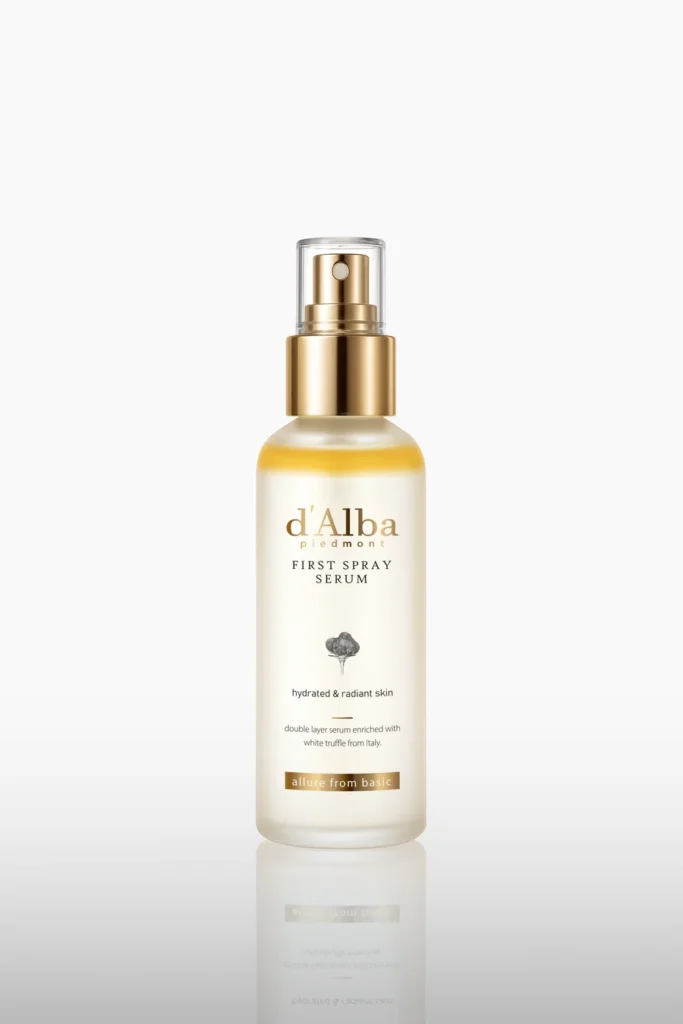
A dual-layer facial mist for shoppers who want instant glow, light nourishment and a makeup-friendly finish. It is less suitable for anyone avoiding fragrance or facial oils.
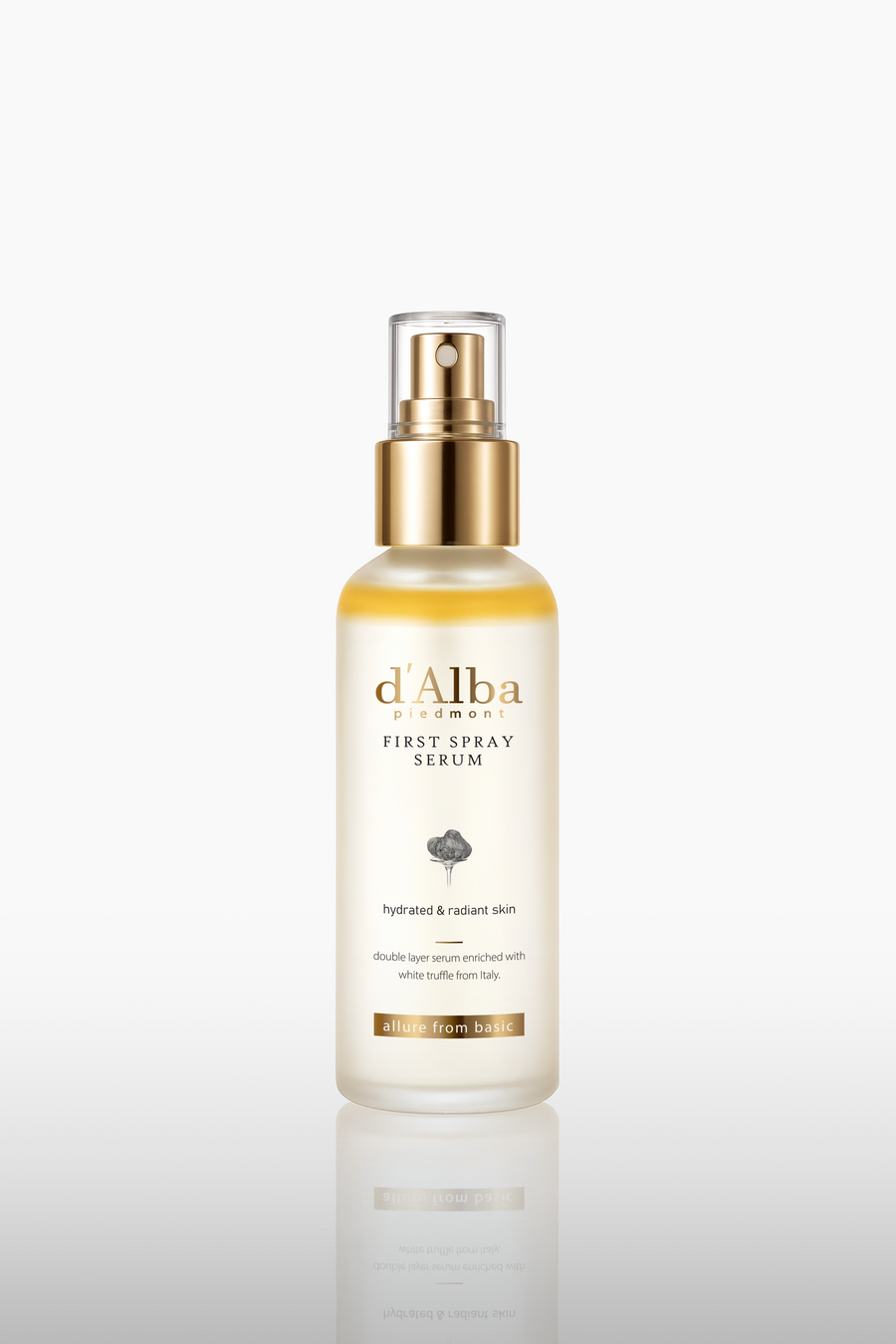
Official d’Alba product image with product name and use case added.
Why it became a global bestseller
d’Alba markets this as a two-layer mist serum that can be used before, during or after makeup. The water and oil phases are shaken together before spraying, creating a fine mist intended to refresh dry-looking skin and add radiance without applying another cream.
Product snapshot
| Type | Dual-layer facial mist serum |
|---|---|
| Sizes | 50 mL and 100 mL |
| Key concept | White truffle extract, vitamin E and an oil blend |
| Best for | Normal to dry skin and makeup that looks powdery or flat |
Texture and finish
After shaking, the mist leaves a soft sheen rather than a fully matte finish. Spray from a short distance and allow it to settle instead of rubbing. Oily skin should start with one or two sprays.
Strengths
- Fast, portable way to refresh makeup and add glow.
- Can replace a heavy midday cream for some users.
- Fine mist makes it easy to control the amount.
Limitations
- The ingredient list includes fragrance and fragrance allergens, which may not suit reactive skin.
- Oil-rich mists can feel too dewy on oily skin or in humid weather.
- Glow is a cosmetic finish; it should not be confused with treatment of a skin condition.
How to use
- Shake thoroughly until the two layers mix.
- Close the eyes and mist evenly from a short distance.
- Use before makeup for prep, between layers to reduce a powdery look, or after makeup for glow.
Final verdict
The First Spray Serum earns its place in a K-beauty Top 10 because it solves a clear styling problem: dry-looking, flat makeup. It is most attractive to glow-focused users who enjoy a lightly scented, nourishing mist.
Editorial note: Formula and availability may vary by market. Patch test when skin is reactive.
Check official d’Alba product information
Is a mist worth adding if you already own a serum?
The strongest reason to choose this format is convenience: a spray can suit a quick finishing step when you do not want to dispense and spread a conventional serum. The trade-off is control. The amount delivered depends on your spray distance and number of presses, so a mist is harder to compare dose-for-dose with a dropper serum.
For hydration immediately after cleansing, a conventional product such as Torriden DIVE-IN may be easier to fit into a measured routine. For a milky liquid applied by hand, compare LANEIGE Cream Skin. These alternatives address different preferences rather than proving one format is better.
Check the exact First Spray Serum variant, fragrance information and directions on the package. Do not assume a glow mist supplies sun protection or replaces sunscreen reapplication. The finish descriptions here interpret the brand’s positioning and formula format; they are not observations from a personal wear test.
Mist, serum or finishing spray?
d’Alba’s two-phase format works differently from a plain water mist. Shaking combines the oil and water phases temporarily, so the product leaves more sheen and surface conditioning than a transparent toner spray. That makes it useful before makeup or as a luminous finishing layer, but it also means that generous application can feel greasy on an oily T-zone.
| Use case | Amount | Expected result |
|---|---|---|
| Before makeup | Two to three light sprays, then press in | More slip and a dewy base |
| Over makeup | One fine pass from a distance | Less powdery finish |
| Dry evening routine | Spray into palms and press before cream | Controlled application without soaking hair |
| Oily or humid conditions | Use sparingly or skip | Avoid excessive surface shine |
Who should be cautious
Fragrance-sensitive users should inspect the current ingredient list and patch-test. The visible glow is a finish benefit, not proof of long-term repair or pigment change. If the spray stings, worsens redness or makes sunscreen separate, it is not serving its intended role.
Application control matters more than the mist label
A spray distributes less predictably than a pump serum. Distance, number of sprays and nozzle condition change how much reaches the face. For a controlled test, shake the bottle as directed, spray into clean palms, and press a measured amount onto one side of the face. Compare that with direct misting on another day. This helps separate the formula’s feel from the experience of overspray on hair, eyes or clothing.
Keep the nozzle clean and avoid touching it to the skin. Do not share the bottle, and close it after use. When applying over makeup, one light pass is enough for the first test; adding repeated layers can dissolve base products or create uneven shine. A mist is convenient, but convenience should not replace careful application around the eyes.
Calculate value by realistic use
Estimate the number of sprays used per application and how many applications occur each week. A bottle used as a dependable morning preparation step may offer better value than a cheaper mist used only occasionally. Compare that with a conventional serum you already own: if the mist does not replace or improve any step, its role is mainly sensory. That can still be worthwhile, but it should be an intentional preference rather than a claim of superior treatment.
Value test
Count how often you would actually use a mist. A product used twice daily as makeup prep may justify its cost; a bottle sprayed only for occasional photos may be poor value. Compare the price per millilitre at authorized sellers and resist buying solely because of a temporary discount. For lighter hydration, read the Torriden DIVE-IN review. For a nourishing toner layer, see our LANEIGE Cream Skin analysis.
Practical verdict
Choose d’Alba for sensory appeal, controlled glow and makeup compatibility. Choose a fragrance-free watery serum when dehydration, rather than finish, is the central problem. Shake before use, keep the spray away from eyes and stop if irritation persists.