Updated October 27, 2026
“Glass skin” describes a smooth, hydrated-looking complexion that reflects light evenly. It is a useful styling goal, but it is not a medical diagnosis, a promise of poreless skin, or proof that a complicated routine is working. The most reliable route is simple: protect the skin barrier, add hydration only where it helps, and use sunscreen consistently.
This guide separates the visual effect from the marketing language. It explains which Korean skincare steps matter, what common ingredients actually contribute, and how to adjust the routine without turning it into a ten-product challenge.
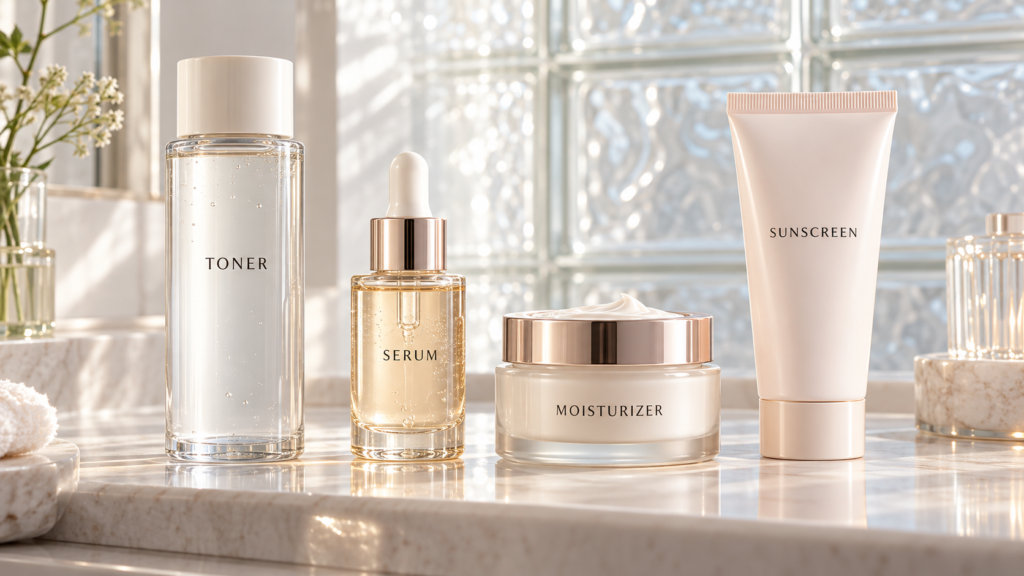
Quick answer: the practical glass skin routine
- Cleanse gently. In the morning, water or a mild cleanser may be enough. At night, remove makeup and water-resistant sunscreen without scrubbing.
- Add a hydrating layer if needed. A toner or essence can make dehydrated skin feel more comfortable, but it is optional.
- Use one targeted serum. Choose it for a clear reason, such as hydration or tone support, rather than stacking several actives.
- Seal with moisturizer. Match the texture to your skin: gel-cream for lighter coverage, cream for more dryness.
- Finish mornings with sunscreen. The American Academy of Dermatology places sunscreen after other skincare products in its recommended order.
That is the complete framework. Additional layers are only useful when they solve a specific problem and remain comfortable.
What creates the “glass” effect?
The effect comes from several small factors working together. A smoother surface reflects light more evenly. Water held in the outer layer can make fine dehydration lines look less obvious. Emollients soften rough edges between surface cells, while a well-chosen moisturizer reduces the tight, flaky finish that breaks up light. Sunscreen protects the routine’s visible results from ongoing ultraviolet exposure.
Makeup can contribute too. A sheer base, strategically placed highlighter, or dewy sunscreen can create immediate reflection. That cosmetic finish is valid; it simply should not be confused with a permanent biological change.
| Goal | Useful product role | What to avoid |
|---|---|---|
| Comfortable hydration | Humectant toner, essence or serum | Adding layers after skin already feels sticky |
| Smoother feel | Moisturizer with emollients and barrier-supporting lipids | Daily harsh scrubs |
| Even-looking finish | Consistent sunscreen and one suitable treatment | Expecting instant removal of pores or texture |
| Visible glow | Dewy sunscreen or light-reflective makeup | Using oiliness or irritation as proof of “glow” |
Morning routine, step by step
1. Cleanse according to what is on your skin
If you wake without heavy residue, rinsing with lukewarm water may be sufficient. Use a gentle cleanser when you have noticeable oil, sweat or occlusive product left from the night before. The goal is a comfortable surface, not a squeaky finish.
2. Use toner or essence only if it improves comfort
A hydrating toner can be useful for skin that feels tight immediately after washing. Apply one thin layer with clean hands and judge the result. Multiple layers are a preference, not a requirement. Skip this step if your serum and moisturizer already provide enough hydration.
3. Choose one serum with a defined job
For hydration, look for formulas built around glycerin, hyaluronic acid or other humectants. Niacinamide is commonly used in cosmetics for skin-conditioning and appearance-focused benefits, but a higher percentage is not automatically better. Sensitive skin often does better with a simpler ingredient list and slower introduction.
4. Moisturize
A moisturizer helps keep the previous water-based layers from evaporating too quickly. Oily skin can still benefit from a light gel-cream, while dry skin may prefer a cream containing ceramides and other lipids. Apply enough to remove tightness without forcing a heavy finish.
5. Apply sunscreen
Use a broad-spectrum sunscreen that you can apply consistently and comfortably. Follow the product directions, cover exposed areas, and reapply as directed when outdoors. Sunscreen is the last skincare step before makeup.
For texture and finish comparisons, see our Korean sunscreen guide for sensitive skin.
Night routine, step by step
1. Remove makeup and resistant sunscreen
If you wore makeup or a water-resistant sunscreen, start with an oil cleanser, cleansing balm or appropriate remover. Follow with a gentle water-based cleanser only when residue remains or the second wash feels useful. Our double cleansing guide explains when one cleanse is enough and when two make sense.
2. Add an optional treatment
Choose one treatment around your main concern and follow its directions. Introducing several acids, retinoids or strong formulas at once makes it difficult to identify the cause of dryness or irritation. A calmer routine usually creates a more even-looking surface than frequent product switching.
3. Moisturize and stop
Finish with a moisturizer suited to your skin. Very dry areas may benefit from a slightly richer layer, while acne-prone or humid-climate routines may feel better with a lighter texture. More shine is not the target; comfort is.
Ingredient roles without the hype
- Glycerin: a widely used humectant that helps a formula attract and hold water at the surface.
- Hyaluronic acid: another humectant found in many toners and serums. Its value depends on the full formula, not the ingredient name alone.
- Ceramides and lipids: common moisturizer components chosen to support a comfortable barrier-focused routine.
- Niacinamide: a versatile cosmetic ingredient often included for conditioning and tone-focused formulas. Start conservatively if your skin is reactive.
- Exfoliating acids: may improve the look of surface roughness for some people, but overuse can create the redness and flaking that work against a smooth finish.
Ingredient lists do not reveal exact performance by themselves. Concentration, pH, delivery system, packaging and the rest of the formula all matter. Product claims also need context: the U.S. Food and Drug Administration distinguishes cosmetic appearance claims from claims that a product treats disease or affects body structure or function.
Adjust the routine by skin type
Dry or dehydrated-feeling skin
Keep cleansing mild, add one humectant layer, and use a cream that leaves skin comfortable through the day. Reduce exfoliation when flaking or stinging appears. A richer night moisturizer may be more useful than another serum.
Oily or acne-prone skin
Use lightweight hydration and avoid piling on occlusive layers simply to create shine. Choose non-comedogenic products when that label is helpful to you, and introduce one new item at a time. Persistent or painful acne deserves professional evaluation rather than a trend routine.
Sensitive skin
Prioritize fragrance-free or simpler formulas if fragrance has caused problems for you. Patch test, space out introductions, and stop products that produce persistent burning, swelling or rash. A three-step cleanse-moisturize-sunscreen routine is enough while skin settles.
Combination skin
Treat zones differently. Apply a lighter moisturizer to oilier areas and a slightly richer layer where cheeks feel tight. There is no rule that one amount or texture must cover the entire face.
A realistic four-week plan
| Week | Focus | What to observe |
|---|---|---|
| 1 | Gentle cleanse, moisturizer, sunscreen | Tightness, stinging, midday comfort |
| 2 | Add one hydrating toner or serum if needed | Whether it improves comfort without stickiness |
| 3 | Keep the routine stable | Dry patches, excess shine, product pilling |
| 4 | Consider one targeted product only if there is a clear need | Tolerance and whether the routine remains easy to follow |
Four weeks is a useful behavior-building period, not a guaranteed biological deadline. Take photos in similar lighting if you want to compare the cosmetic finish more fairly.
Five common mistakes
- Believing seven layers are mandatory. Layer count is not a quality score.
- Exfoliating every day for more reflection. Irritation can make texture and redness more visible.
- Stacking multiple active products. This increases complexity and makes reactions harder to trace.
- Equating oiliness with hydration. Surface shine and water balance are different.
- Expecting poreless skin. Pores are normal structures; skincare can change their visible appearance, not erase them.
How to evaluate a “glass skin” product
- Identify the product’s job: cleanse, hydrate, moisturize, protect or add cosmetic glow.
- Read the directions and warnings before the headline claim.
- Compare size, price per amount and how often you will realistically use it.
- Prefer packaging that protects light- or air-sensitive formulas when relevant.
- Look for complete ingredient information and a responsible seller.
- Be cautious with language that promises treatment, permanent restructuring or guaranteed results.
For a broader sequence overview, read our Korean skincare routine order guide. If brightening is your main goal, our Goodal Green Tangerine serum analysis shows how to assess a targeted formula without treating brand claims as guarantees.
Editorial verdict
A convincing glass-skin routine is less about quantity and more about control. Cleanse without over-stripping, use one hydration step when it earns its place, moisturize for comfort, and protect the result with sunscreen. Add a treatment only when you can name the concern and monitor tolerance.
The realistic outcome is skin that looks calmer, smoother and more evenly reflective under good lighting. Natural pores, lines and texture remain normal. That honest expectation makes the routine easier to sustain and easier to shop for.