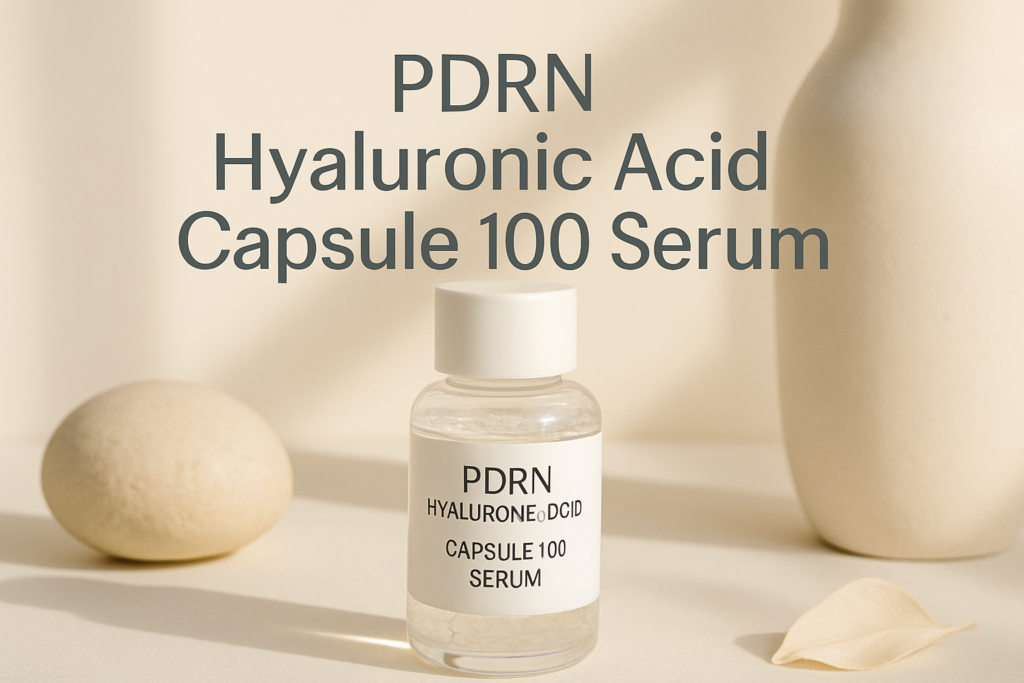
Updated September 16, 2026. Anua PDRN Hyaluronic Acid Capsule 100 Serum is not merely an overseas social-media discovery. The product is currently visible in Olive Young Korea’s best-selling listings, including refill and double-pack formats, and Anua is also selling it through its official international website. That combination makes it a useful snapshot of where Korean skincare is moving: lightweight hydration, a glossy finish, capsule-style delivery, and the increasingly familiar use of sodium DNA, commonly described by the brand as salmon-DNA-derived PDRN.
Quick verdict
Best for: Normal, dry, dehydrated, and combination skin that prefers a light serum with a dewy finish.
Skip or sample carefully if: You dislike glossy layers, need a minimalist formula, or are specifically seeking a strong exfoliating, acne-focused, or retinoid product.
Our take: This is primarily a sophisticated hydrating serum, not a topical substitute for professional PDRN procedures. Its strongest case is the blend of humectants, several forms of hyaluronic acid, niacinamide, and a pleasant glow—not the most dramatic interpretation of the PDRN trend.
What is Anua PDRN Hyaluronic Acid Capsule 100 Serum?
Anua PDRN Hyaluronic Acid Capsule 100 Serum is a 30 mL facial serum made in South Korea. The official Korean product page lists it as suitable for all skin types and identifies the product as a dual-function cosmetic for brightening and wrinkle care under South Korean cosmetic regulations. Those regulatory categories should not be read as medical treatment claims or as proof that the product will produce a specific visible result for every user.
The formula is built around a “triple” concept: PDRN, hyaluronic acid, and collagen. In the ingredient list, PDRN appears as sodium DNA at 100 ppm. The same list includes hydrolyzed hyaluronic acid, sodium hyaluronate, hyaluronic acid, hydrolyzed sodium hyaluronate, hydroxypropyltrimonium hyaluronate, potassium hyaluronate, sodium hyaluronate crosspolymer, and sodium acetylated hyaluronate.
That long list can sound more revolutionary than it is. Different hyaluronic-acid forms can vary in molecular size, charge, and film-forming behavior, but the practical result for a shopper is simpler: this is a water-based, humectant-heavy serum designed to make skin feel hydrated and look more reflective.
Why it is trending in Korea
There is a clear retail signal behind the attention. Olive Young Korea has displayed Anua PDRN Hyaluronic Acid Capsule 100 Serum in best-selling and ranking-linked product placements, including a 30 mL serum with a 30 mL refill. A current Korean retail-tracking page also placed an Anua PDRN serum set near the top of Olive Young Korea’s all-category ranking in week 37 of 2026.
These listings do not prove that it is the best serum in Korea, nor do they reveal how many individual units were sold. They do show that the product has meaningful visibility in Korea’s largest beauty retail environment. The product is also available through Anua’s official U.S. website and Olive Young’s international channels, giving it a stronger export pathway than a Korea-only launch.
The timing matters. PDRN has become one of the most discussed Korean skincare ingredients because it connects cosmetic packaging with the language of professional skin treatments. Anua’s version makes the trend easier to approach: the product is a familiar daily serum rather than an in-clinic procedure. That accessibility is a major reason it has traveled well.
Key ingredients and what each does
Sodium DNA, described by Anua as PDRN
Anua identifies the formula’s sodium DNA as salmon-DNA-derived PDRN. In this product, it is listed at 100 ppm on the Korean product page. The ingredient is part of the formula’s identity and marketing story, but shoppers should keep expectations cosmetic. A leave-on serum is not equivalent to injectable polynucleotide or PDRN treatments, and this article does not treat it as one.
Hyaluronic acid and its derivatives
Hyaluronic acid and its derivatives are the main hydration system. They are humectant and film-forming ingredients that help attract or hold water near the skin surface, contributing to a temporarily smoother, fuller-looking appearance. The formula uses several forms rather than relying on one type, which may help create a mix of slip, surface comfort, and a hydrated finish.
Glycerin, butylene glycol, and propanediol
These are familiar water-binding solvents and humectants. They help the serum spread, support a comfortable texture, and reduce the dry or tight feeling that can occur when skin lacks surface moisture. Their presence also helps explain why the product feels more like a hydration serum than an oil-based treatment.
Niacinamide
Niacinamide appears relatively high in the ingredient list. In cosmetic formulas, it is commonly used to support a more even-looking tone, refine the appearance of pores, and reinforce the overall feel of a balanced skin routine. The exact visible result depends on concentration, the rest of the formula, and consistent use. Anua does not disclose the percentage on the official product page.
Hydrolyzed collagen
Hydrolyzed collagen is included as a conditioning and film-forming ingredient. Topically, it can help skin feel smoother and more moisturized, but it should not be interpreted as replacing the collagen structure in skin. Its role here is best understood as part of the serum’s surface-conditioning and plumping-feel strategy.
Glutathione, adenosine, and botanical extracts
The formula also includes glutathione, adenosine, Coptis japonica root extract, neem leaf and flower extracts, Indian gooseberry-related botanical material, eggplant fruit extract, holy basil, turmeric, and red-algae-derived extract. These ingredients support the product’s antioxidant and brightening-oriented positioning, although the official page does not provide enough information to predict how much any individual botanical will contribute in everyday use.
Texture, finish, and layering behavior
Anua describes the serum as lightweight and fast-absorbing, with a naturally emerald-tinted appearance produced by the formula’s ingredients rather than artificial color. The texture is best understood as a fluid gel-serum: more substantial than watery essence, but lighter than a cream or facial oil.
The finish leans dewy. On dry or dehydrated skin, that can read as fresh and cushiony. On oily skin, especially in humid weather, it may look shinier than expected. The serum can sit comfortably under moisturizer and sunscreen, but applying too much may increase tackiness or cause pilling with incompatible makeup and sunscreen formulas.
Who should use it—and who may not like it?
Good fits
- Dry skin: The humectant-heavy formula can add a water-based layer before a richer cream or balm.
- Dehydrated combination skin: It offers hydration without the weight of a facial oil, although the T-zone may need only a small amount.
- Normal skin: A good match if you enjoy a polished, luminous finish and uncomplicated daily layering.
- Dull-looking skin: Niacinamide and the glossy finish may help skin look fresher, while the hydration can temporarily soften the look of fine dehydration lines.
Poorer fits
- Very oily skin: The dewy finish may feel excessive, particularly under makeup or in hot weather.
- Highly reactive skin: Although the brand labels the product low-irritation and suitable for all skin types, individual tolerance varies. Patch testing remains sensible.
- Minimalist routines: The long ingredient list and multiple botanical extracts may not appeal if you prefer a short, highly transparent formula.
- Those seeking intensive treatment: This is not an exfoliating acid, retinoid, benzoyl peroxide product, or medical treatment. Its central job is hydration and surface conditioning.
How to use it
After cleansing and toner or essence, dispense a small amount and spread it evenly over the face. Press gently until comfortable, then follow with moisturizer. In the morning, finish with sunscreen.
Start with one layer. If your skin is very dry, you can add a second thin layer to the cheeks rather than applying a large amount everywhere. Avoid treating the serum as an occlusive step; it works best when followed by a moisturizer suited to your skin type.
The Korean product page lists a 30-month unopened period and six months after opening. Follow the packaging directions in your market, keep the bottle away from direct sunlight, and stop use if persistent irritation develops.
Strengths
- Strong hydration profile: Glycerin, glycols, and multiple hyaluronic-acid forms give the formula a clear moisture-first focus.
- Current Korean retail relevance: Its Olive Young Korea visibility is a more meaningful signal than social-media buzz alone.
- Export accessibility: Anua sells the product through an official international site, and the serum is also present in global Korean-beauty retail channels.
- Glow-friendly finish: It can make skin appear smoother and more reflective without the heaviness of a traditional facial oil.
- Refill availability: Korean retail listings show refill and double-pack formats, which may be useful for regular users and reduce packaging per milliliter.
Limitations
- PDRN is not the whole formula: The product’s everyday performance is likely to be felt mainly as hydration, slip, and surface conditioning.
- No disclosed headline percentages: Anua identifies the presence of key ingredients but does not disclose the percentage of niacinamide, collagen, glutathione, or most botanical extracts on the official page.
- Potentially shiny finish: The glow that attracts dry-skin shoppers may be too glossy for oily skin or matte makeup routines.
- Ingredient-list differences can occur: Korean and international packaging may present slightly different labeling or formatting. Check the box you receive, especially if you have known sensitivities.
- Not a replacement for targeted actives: It will not replace a routine built around acne care, retinoids, exfoliation, or pigment-focused treatment.
Buyer checklist
- Confirm that the name on the box is PDRN Hyaluronic Acid Capsule 100 Serum, not the separate serum mask, mist, cream, or one-day capsule format.
- Check whether you are buying the 30 mL bottle, a 30 mL refill set, or a limited-edition bundle.
- Buy from Anua’s official site or a reputable authorized retailer to reduce the risk of old, improperly stored, or counterfeit stock.
- Patch test before applying it across the entire face if your skin is reactive or you are introducing several new products.
- Do not choose it solely because “PDRN” sounds similar to professional procedures. Evaluate it as a hydrating cosmetic serum.
- If you dislike fragrance, review the ingredient panel on your specific market’s packaging before purchase. The official U.S. ingredient list does not show added parfum, but labels can change.
Alternatives and comparison
| Product | Best for | How it differs |
|---|---|---|
| Anua PDRN Hyaluronic Acid Capsule 100 Serum | Glossy hydration and a lightweight PDRN-led formula | More focused on multi-humectant moisture and a luminous finish than on exfoliation or oil control. |
| COSRX Advanced Snail 96 Mucin Power Essence | Comforting hydration with a cushiony essence texture | Uses snail secretion filtrate as its signature ingredient and generally feels more essence-like than Anua’s capsule serum. |
| SKIN1004 Madagascar Centella Probio-Cica Intensive Ampoule | Users who prefer a richer soothing-style ampoule | Leans more toward centella and barrier-oriented conditioning, with a more substantial finish. |
| Beauty of Joseon Revive Serum: Ginseng + Snail Mucin | Hydration with a more traditional Korean herbal-inspired profile | Uses ginseng and snail mucin as its identity rather than PDRN and multiple hyaluronic-acid derivatives. |
Transparent editorial note
This article separates observable retail and product-page information from brand language. Olive Young listings and international availability support the conclusion that Anua PDRN Hyaluronic Acid Capsule 100 Serum has meaningful current visibility in Korea and abroad. Claims about a dewy finish, lightweight texture, ingredient functions, and likely skin-type fit are editorial interpretations based on the published formula and product description—not personal testing, clinical diagnosis, or a promise of results.
The most balanced way to view this serum is as a contemporary Korean hydration product with a strong trend ingredient. Its appeal is understandable: a light texture, multiple humectants, niacinamide, a glossy finish, and a product story that feels distinctly current. If you want a comfortable daily serum that makes skin look more hydrated, it deserves consideration. If you are buying it for the same effect as an injectable or professional PDRN treatment, the marketing has moved beyond what a topical cosmetic can reasonably promise.