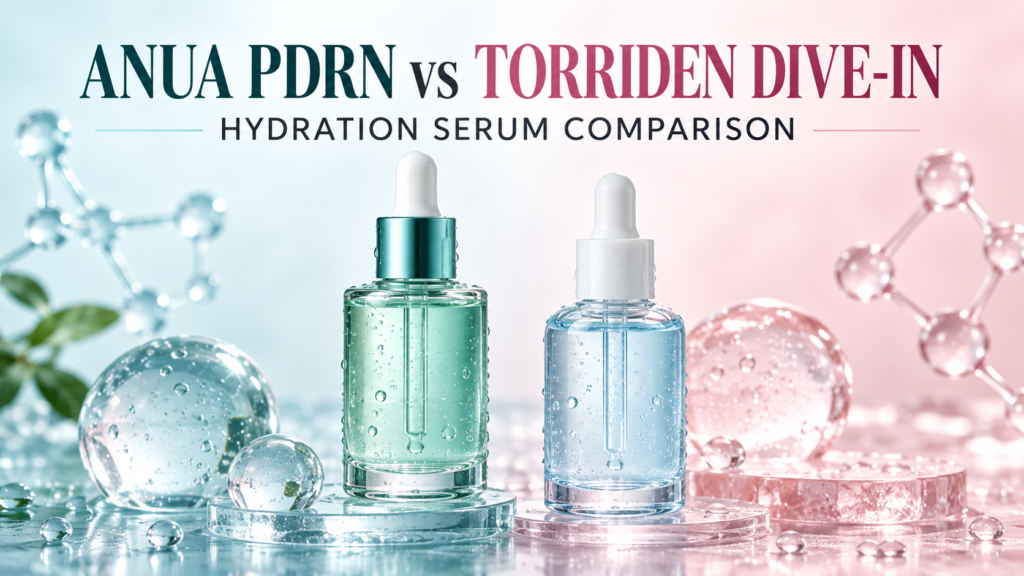
Anua PDRN Hyaluronic Acid Capsule 100 Serum and Torriden DIVE-IN Serum are both Korean hydration serums, but they answer different shopping questions. Anua combines hydration with glow-oriented ingredients and salmon-DNA-derived sodium DNA. Torriden keeps the brief narrower: lightweight, repeatable hydration built around a five-molecular-size hyaluronic acid complex. This comparison uses current official product information and does not claim a personal wear test or clinical head-to-head result.
Quick decision
- Choose Anua PDRN when you want hydration plus a dewy, bright-looking finish from one multi-ingredient serum.
- Choose Torriden DIVE-IN when tightness and easy layering are the main problems, especially in a busy morning routine.
- Choose by routine fit, not ingredient novelty. PDRN does not make a topical serum equivalent to an injectable procedure.
- For reactive skin, introduce one serum at a time and keep the rest of the routine stable.
Anua PDRN vs Torriden DIVE-IN at a glance
| Decision point | Anua PDRN Capsule 100 | Torriden DIVE-IN |
|---|---|---|
| Main goal | Hydration plus luminous, plump-looking skin | Focused daily hydration |
| Official formula focus | PDRN/sodium DNA, multiple hyaluronic-acid forms, niacinamide, glutathione and hydrolyzed collagen | Five molecular sizes of hyaluronic acid with panthenol and allantoin |
| Texture direction | Light capsule-style serum with a dewy finish | Watery gel serum designed for low-friction layering |
| Best fit | Dull, dehydrated or glow-focused routines | Dehydrated, combination or easily overloaded routines |
| Morning use | Use a small amount and test with sunscreen | Easier starting point under SPF and makeup |
| Key limitation | More formula complexity than a minimalist routine may need | Does not promise the same tone-supporting ingredient mix |
What Anua PDRN is actually offering
Anua’s current U.S. product information describes a combination of PDRN, hyaluronic acid and collagen, with sodium DNA derived from salmon DNA. The ingredient list also includes glycerin, several hyaluronic-acid forms, niacinamide, glutathione and hydrolyzed collagen. The brand positions the serum for radiant hydration, moisture plumping and a lightweight, fast-absorbing feel.
The defensible expectation is a more hydrated surface and a smoother, dewier appearance. Topical PDRN marketing should not be confused with in-office treatment evidence. A cosmetic serum can support the look and feel of skin without reproducing the delivery, dose or outcome of a medical procedure.
Anua is the stronger fit when
- you want one serum to address dehydration and a dull-looking finish;
- niacinamide already works well in your routine;
- you enjoy a visibly dewy result rather than a barely-there finish;
- you prefer a multi-benefit serum over separate hydration and tone-supporting steps.
Think twice when
- you react easily to complex formulas or several new ingredients at once;
- you already use multiple niacinamide or brightening products;
- you are buying primarily because “PDRN” sounds medical;
- fish-derived materials conflict with your personal preferences.
What Torriden DIVE-IN is actually offering
Torriden’s official DIVE-IN information centers on a five-molecular-size hyaluronic acid complex. The brand also highlights panthenol and allantoin. This is a narrower proposition than Anua’s: add water-binding hydration, reduce the feeling of tightness and fit beneath other products without excessive weight.
The main advantage is predictability. A straightforward hydration serum can be useful when sunscreen, retinoids or other targeted treatments already make the routine complex. Its limitation is equally clear: buyers looking for a dedicated brightening or glow-ingredient story may find it too simple.
Torriden is the stronger fit when
- dehydration and tightness are the main concerns;
- you want a light layer beneath moisturizer and sunscreen;
- your skin becomes oily when too many rich layers are stacked;
- you already use separate treatment products and need a supporting hydrator.
Think twice when
- you expect one serum to replace a brightening treatment;
- you skip moisturizer in dry weather and expect hyaluronic acid alone to prevent tightness;
- your skin consistently dislikes humectant-heavy layers.
Ingredient strategy: broad complex vs focused hydration
Anua uses a broader cosmetic strategy. Humectants supply hydration, while niacinamide and glutathione contribute to the glow and tone-supporting story. Hydrolyzed collagen acts primarily as a conditioning and moisture-supporting ingredient on the skin surface. Sodium DNA is the PDRN-linked headline ingredient, but the product should still be judged as a complete topical formula.
Torriden emphasizes different sizes of hyaluronic acid, plus panthenol and allantoin. Molecular-size language explains the brand’s delivery concept, but it should not be interpreted as proof that the serum reaches every biological layer of skin. The practical question is whether the texture supplies comfortable hydration without pilling or stickiness in your routine.
Texture, finish and makeup compatibility
Torriden is the safer first choice for a fast morning routine because its purpose is narrow and its texture is designed for layering. Apply a small amount, wait briefly, then use moisturizer and sunscreen. Anua can also work in the morning, but a dewy serum plus rich moisturizer plus luminous sunscreen may create more shine or pilling than expected. Reduce the number or amount of layers before blaming a single product.
At night, Anua makes more sense when one serum is expected to cover hydration and a brighter-looking finish. Torriden is useful when a retinoid or exfoliant already supplies the treatment step and the routine needs a calmer hydration layer.
Skin-type decision guide
| Skin situation | Better starting point | Reason |
|---|---|---|
| Oily but tight after cleansing | Torriden | Focused hydration with less routine weight |
| Dry and dull-looking | Anua, followed by moisturizer | Hydration plus a glow-oriented ingredient mix |
| Combination skin under makeup | Torriden | Easier to keep layers thin |
| Simple night routine | Anua | One serum covers more cosmetic goals |
| Highly reactive skin | Neither automatically wins | Patch-test; formula tolerance is individual |
How to use either serum efficiently
- Cleanse gently and leave the skin slightly damp, not dripping.
- Apply a small, even serum layer. More product does not guarantee more hydration.
- Wait until the surface no longer feels very wet.
- Follow with a moisturizer matched to your skin type and climate.
- Use broad-spectrum sunscreen every morning.
In dry air or heated rooms, humectants work better when followed by a cream that reduces water loss. If tightness returns quickly, changing the moisturizer may help more than doubling the serum amount.
Can you use both?
You can, but the combination is rarely necessary. Layering two hydration serums adds cost and increases the chance of stickiness or pilling. A clearer test is to use Torriden in the morning and Anua at night, or finish one bottle before opening the other. That approach makes it easier to judge comfort, compatibility and value.
Which one is better value?
Prices and sizes vary by seller and promotion, so calculate the authorized-seller price per millilitre. Then consider whether the serum replaces another step. Torriden can be better value when a basic hydrator is used twice daily. Anua can be better value when it replaces separate hydration and glow-focused serums. A discount badge is less useful than cost per use and the likelihood that you will finish the bottle.
Final recommendation
Torriden DIVE-IN is the lower-friction starting point for most first-time buyers. It has a clear job and fits easily into layered routines. Anua PDRN is the more ambitious choice for dehydration plus a dewy, brighter-looking finish. Choose based on the role missing from your routine, not on which headline ingredient sounds more advanced.
Editorial note: Formulas and packaging can change by region and date. Check the ingredient list on the product you receive, buy from an authorized seller and patch-test. Persistent irritation, swelling or rash warrants professional advice.
Official sources and method
- Anua official PDRN Hyaluronic Acid Capsule 100 Serum information
- Torriden official DIVE-IN Serum information
This editorial comparison interprets current published specifications, ingredient roles and routine fit. It does not report personal testing, measured wrinkle change or clinical superiority. Check the current regional listing and package because names, sizes and ingredient lists can be updated.