Updated October 6, 2026.
Editorial verdict: Medicube Zero Pore Pads 2.0 are a convenient exfoliating toner-pad option for shoppers who want one product to address rough-feeling texture, visible congestion and excess surface oil. The formula is more active than a basic hydrating pad, however, so it is not an automatic match for very sensitive, dry or easily irritated skin.
Quick verdict
Best for: Combination, oily and resilient normal skin that wants a fast exfoliating step.
Use it when: Your main concerns are uneven texture, a dull surface, visible sebaceous filaments or occasional congestion.
Be cautious if: Your barrier is compromised, you react to exfoliating acids, or you already use several strong actives.
Overall: A practical, globally visible Korean toner pad with a clear exfoliating purpose, but the “pore” language should be interpreted as improving the look of texture and congestion rather than permanently changing pore size.
What is Medicube Zero Pore Pads 2.0?
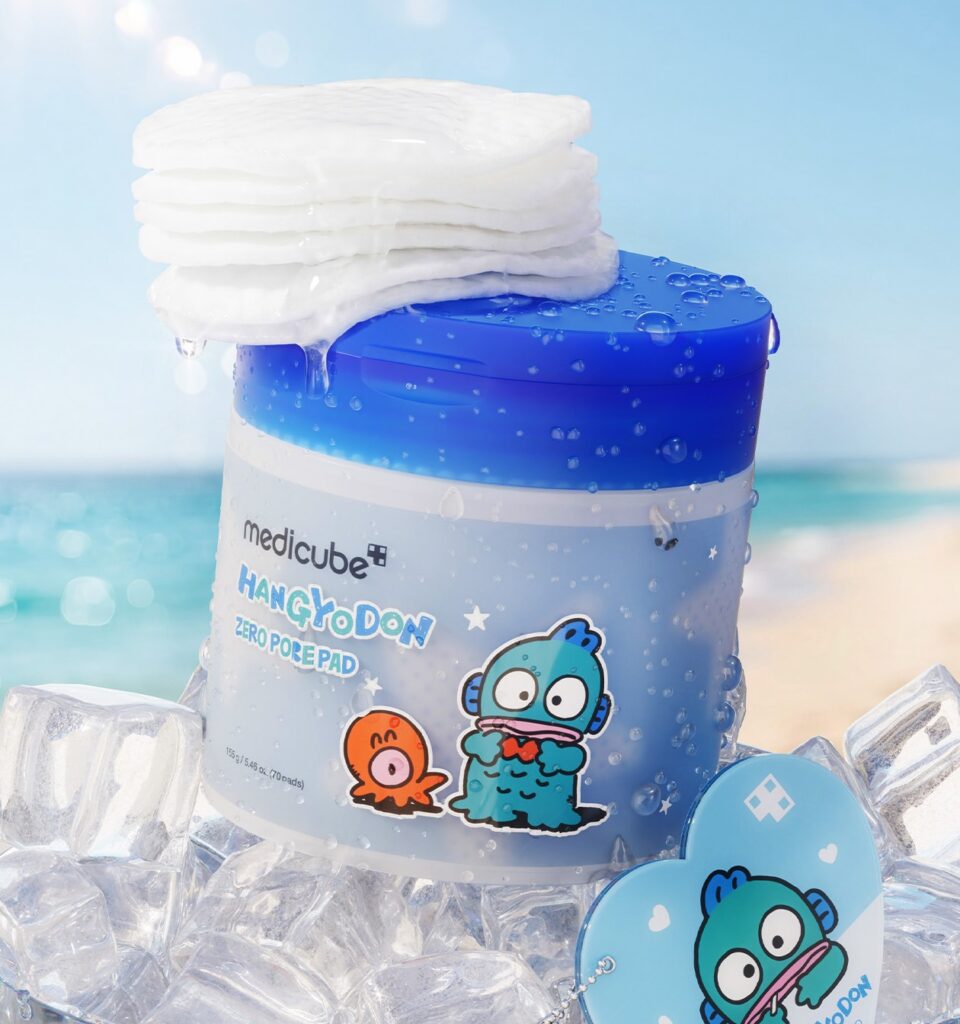
Medicube Zero Pore Pads 2.0 are pre-soaked facial toner pads designed to be used after cleansing and before the rest of a skincare routine. The official Korean product page lists 70 pads in a 155 g container and identifies South Korea as the country of manufacture. The brand instructs users to sweep the embossed side over the face, avoiding the eye and mouth areas, then finish with the softer side before patting in the remaining liquid.
The product is also listed on Medicube’s official U.S. store as a 70-pad AHA-and-BHA exfoliating pad. The Korean and U.S. ingredient lists both show lactic acid, denatured alcohol, salicylic acid and betaine salicylate, followed by conditioning ingredients and multiple citrus or aromatic oils. That international documentation is more useful for shoppers than a temporary marketplace ranking.
Key ingredients and what they do
Lactic acid
Lactic acid is an alpha hydroxy acid, or AHA. In a cosmetic formula, it helps loosen the bonds between surface dead skin cells so the skin feels smoother and looks more even. Compared with some smaller AHAs, lactic acid is often positioned as a relatively approachable exfoliating acid, although tolerance still depends on concentration, pH, frequency and the individual user.
Medicube’s official U.S. product page describes the pads as containing AHA and BHA, while the official Korean ingredient list names lactic acid. The brand does not present a concentration for the lactic acid on the official page reviewed for this article, so shoppers should not assume that a percentage printed by a reseller represents the complete or current formula.
Salicylic acid and betaine salicylate
Salicylic acid is a beta hydroxy acid, or BHA, commonly used in cosmetic exfoliating products because it is oil-compatible. That makes it a logical ingredient for routines focused on excess sebum and the look of clogged pores. The Korean ingredient list also includes betaine salicylate, another salicylate-based exfoliating ingredient.
This does not make the pads a medical acne treatment. It means the formula uses exfoliating ingredients that may help improve the appearance and feel of surface congestion when used appropriately.
Panthenol, betaine, allantoin and sodium hyaluronate
The formula also contains panthenol, betaine, allantoin and sodium hyaluronate. These are commonly used as humectant, conditioning or skin-comfort ingredients. They can make an exfoliating toner feel less stark than an acid-only liquid, but their presence does not cancel out the potential for irritation from acids, alcohol or fragrant essential oils.
Botanical extracts and essential oils
The ingredient list includes centella asiatica extract, willow bark extract, green or citrus-related botanical extracts and several essential oils, including lemon peel, bergamot, eucalyptus, rosemary, lavender and orange peel oils. The brand also lists limonene.
These ingredients help explain the product’s fresh, aromatic profile, but they are also relevant to sensitive-skin shoppers. Fragrance components and essential oils are not automatically problematic for everyone; they are simply less predictable for people who frequently experience stinging, redness or fragrance sensitivity.
Texture, pad design and finish
The product is a watery toner rather than a viscous essence. Each pad is saturated enough to glide over the face, while the dual-sided construction gives it two functions: the embossed side provides a more noticeable wiping sensation, and the softer side is intended for finishing the application.
Used lightly, the finish should feel fresh and relatively low-residue. It is not designed to leave a rich, cushioned film. That makes it easier to layer under a serum or moisturizer, especially for combination and oily skin, but it may feel insufficient on its own for dry skin.
The pad format is convenient, though not necessarily more economical or environmentally efficient than using a liquid toner with reusable cotton pads. The jar also needs to be closed carefully so the remaining pads do not dry out.
Best and poor fits by skin type
Best fits
- Combination skin: A useful option when the T-zone feels congested but the cheeks do not need a heavy cream.
- Oily skin: The acid combination and wiping format may suit shoppers who prefer a more active toner step.
- Resilient normal skin: Can work as an occasional texture-refining step rather than an automatic daily product.
- Makeup users: The smoother-feeling surface may make subsequent base application more comfortable, although this is a cosmetic effect rather than a treatment claim.
Poorer fits
- Very sensitive skin: Acids, alcohol denat., essential oils and limonene create several possible irritation variables.
- Very dry or compromised skin: Exfoliation may feel too stripping when the skin is already tight, flaky or uncomfortable.
- Users of multiple strong actives: Combining this pad with retinoids, leave-on acids, strong vitamin C formulas or aggressive scrubs may make the routine unnecessarily intense.
- Fragrance-sensitive shoppers: The essential-oil blend makes this a less conservative choice than a simple fragrance-free hydrating pad.
How to use Medicube Zero Pore Pads 2.0
- Cleanse and gently dry your face.
- Take one pad and sweep the embossed side over the face, avoiding the eye and lip contours.
- Turn the pad over and lightly pass the soft side over the same areas.
- Pat in the remaining liquid. Follow with hydrating and moisturizing products.
- Use sunscreen during the day. AHAs can increase sensitivity to sunlight, and the brand specifically advises sun protection and a small-area test before use.
For a first use, start once or twice weekly rather than assuming the product should be used every day. If the skin remains comfortable, frequency can be adjusted gradually. Do not scrub aggressively; the acids are already doing the exfoliating work.
Strengths
- Clear product purpose: Unlike a vague “glow” pad, this one is built around exfoliation and the appearance of pore congestion.
- Convenient format: Pre-soaked pads simplify application and travel packing.
- Two-sided design: Users can choose a more textured pass or a softer finishing pass.
- Strong international attention: The product has appeared in prominent U.S. retail and editorial coverage, giving global shoppers easier access than many Korea-only launches.
- Useful active combination: Lactic acid and salicylic acid address different aspects of surface texture and oil-related congestion.
Limitations
- No disclosed acid percentages on the official page reviewed: This makes it difficult to compare strength precisely with percentage-labeled exfoliants.
- Potentially busy formula: Alcohol, essential oils and multiple botanical extracts may not suit reactive skin.
- “Pore” claims need realistic expectations: The pads may improve the temporary appearance of texture or congestion, but they cannot permanently erase pores.
- Not a complete routine: The product supplies an exfoliating toner step, not a moisturizer, sunscreen or comprehensive barrier-care routine.
- Possible overuse: The convenient pad format can encourage daily use even when a lower frequency would be more appropriate.
Buyer checklist
- Check that the packaging says Zero Pore Pads 2.0, not the separate Mild version.
- Confirm the ingredient list if you are avoiding fragrance, alcohol or essential oils.
- Buy from the official brand store or an authorized retailer where possible.
- Do not rely on a marketplace listing for acid percentages unless the information matches the current brand packaging.
- Plan the rest of your routine before purchasing: if you already use several exfoliating products, this may be redundant.
- Patch test first, particularly if you have a history of reactions to exfoliating acids.
Alternatives and comparison
| Product | Format | Main direction | Who may prefer it |
|---|---|---|---|
| Medicube Zero Pore Pads 2.0 | Dual-textured pre-soaked pad | Lactic acid, salicylic acid and pore-focused exfoliation | Combination or oily skin seeking a more active pad |
| Anua Heartleaf 77 Toner Pad | Pre-soaked toner pad | More soothing and hydrating positioning | Shoppers who want a gentler-feeling daily pad |
| Needly Daily Toner Pad | Textured toner pad | Daily skin-conditioning and light surface smoothing | Those who prefer a simpler maintenance step |
| Liquid AHA or BHA toner | Bottle-based liquid | More control over the amount and application method | Experienced users who want to customize frequency |
The alternatives are not direct formula equivalents. They represent different approaches to the same toner-pad category: stronger exfoliating intent, a more soothing direction, a maintenance-oriented pad or a more adjustable liquid format.
Final assessment
Medicube Zero Pore Pads 2.0 are a credible example of the current Korean toner-pad format: compact, easy to use and built around a recognizable combination of AHA and BHA exfoliation. Their official availability in both Korea and the United States makes them relevant to global K-beauty shoppers, not merely a Korea-only product.
The main question is tolerance. If your skin is combination, oily or generally resilient, the pads may be a convenient way to add occasional exfoliation. If your skin is sensitive, dry or already exposed to multiple actives, a fragrance-free hydrating pad or a carefully controlled liquid exfoliant may be a better starting point.
Transparent editorial note: Updated October 6, 2026. This article evaluates Medicube’s official Korean product information and official U.S. ingredient listing. Brand statements about pore appearance and test results are treated as brand claims, not independent proof of guaranteed results. No personal testing, clinical evaluation or medical assessment was conducted for this article.