Reviewed by: TENCHOICE BEAUTY Editorial Team
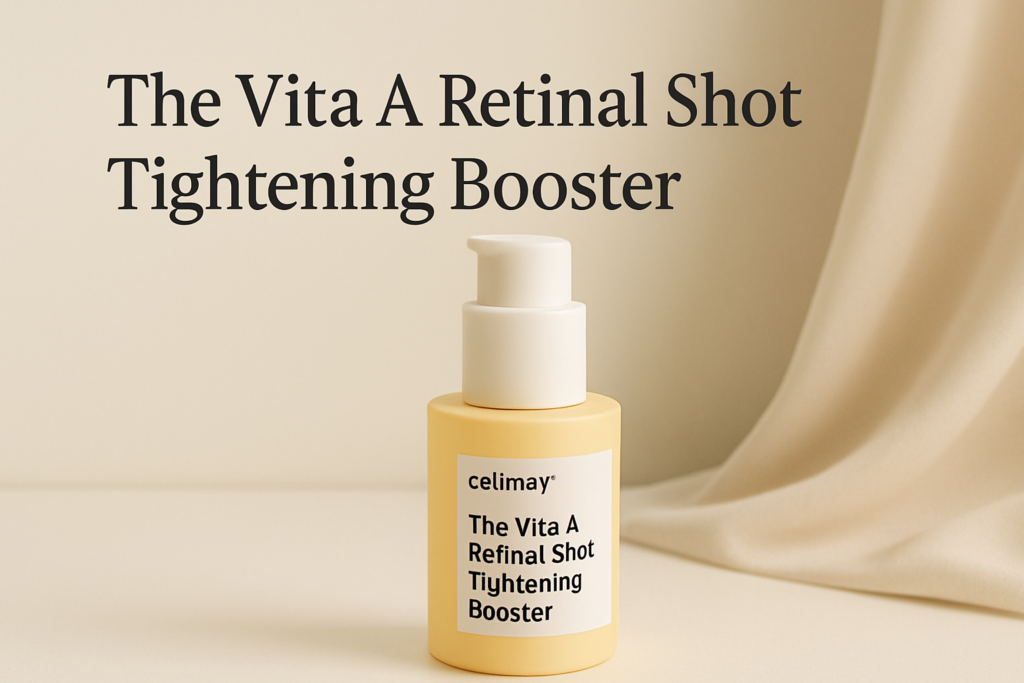
celimax The Vita A Retinal Shot Tightening Booster is one of the clearest examples of Korea’s current move toward more concentrated, treatment-style skincare. Rather than presenting itself as a basic hydrating ampoule, it combines retinal, peptides, panthenol and the brand’s proprietary A-Shot technology in a small 15ml format.
The product is also unusually easy to verify as a genuine trend rather than a social-media-only launch. It appears among celimax’s best-selling serum products on the brand’s international store, has accumulated substantial customer-review activity there, and was reported by YesStyle’s parent company as ranking first among beauty products on the global retailer’s platform in 2025.
That does not prove that every user will see the same result. It does show meaningful commercial attention and strong export visibility. The more useful question is whether this formula suits your skin, routine and tolerance for a potentially active vitamin A product.
Quick verdict
Best for: Experienced skincare users who want a targeted retinal product with a richer, cream-serum feel rather than a watery essence.
Worth considering if: Your priorities include the look of uneven texture, visible pores or fine lines, and you are prepared to introduce retinal gradually.
Think twice if: Your barrier is currently irritated, you are new to vitamin A products, or you prefer a completely weightless serum.
Bottom line: celimax has built a focused formula around 0.1% liposomized retinal, 3% Matrixyl and 1% panthenol. The ingredient story is coherent, but the brand’s claims about pore, wrinkle and firmness improvement should be treated as brand-reported results rather than a guarantee for every buyer.
Product overview
The Vita A Retinal Shot Tightening Booster is a leave-on facial treatment supplied in a 15ml tube or bottle format, depending on the market presentation. The official product page lists 0.1% liposomized retinal, 3% Matrixyl, 1% panthenol and 20,250 units of the brand’s A-Shot technology.
Its formula is not simply a thin water-based serum. The ingredient list begins with water, butylene glycol and glycerin, then moves into caprylic/capric triglyceride, cetearyl alcohol, niacinamide, diisostearyl malate and panthenol. That combination points to a cushioned, emulsion-like texture with both humectant and emollient elements.
The product page describes the booster as targeting wrinkles, uneven texture and enlarged pores. Those are cosmetic positioning claims. The brand also presents internal clinical-test results for wrinkle, pore and skin-density measures. Because the page does not provide enough study detail to independently assess the full methodology, those numbers should be read as manufacturer-reported evidence, not as an independent guarantee.
Key ingredients and what each does
Retinal
Retinal is a vitamin A derivative used in cosmetic formulas for the appearance of fine lines, uneven texture and signs of photoaging. It sits in the same broad family as retinol but is not the same ingredient. The official formula lists retinal after tocopherol and before several supporting ingredients, while the brand identifies it as 0.1% liposomized retinal.
“Liposomized” describes the delivery format claimed by the brand. It does not mean the product is automatically irritation-free or suitable for every beginner. Retinal products can still be challenging for skin that is dry, reactive or unaccustomed to vitamin A.
Matrixyl
Matrixyl is the brand’s name for a peptide combination. The full ingredient list includes Palmitoyl Tripeptide-1 and Palmitoyl Tetrapeptide-7, which are commonly used in cosmetic formulations focused on the look of firmness and fine lines.
Peptides are supportive rather than instant-transformative ingredients. Their inclusion makes sense alongside retinal, but the presence of Matrixyl does not cancel out the need for gradual use.
Panthenol
Panthenol is a humectant and conditioning ingredient commonly included to help skin feel more comfortable and moisturized. The official page lists it at 1%. In this formula, it helps balance the more active positioning of retinal with a skin-conditioning component.
Niacinamide
Niacinamide appears relatively high in the ingredient list, after cetearyl alcohol. It is widely used in skincare for supporting the appearance of more even tone, smoother-looking texture and a healthier-looking barrier. The product page does not state its percentage, so it is not accurate to assign one.
Supporting emollients and antioxidants
Glycerin helps attract water to the skin’s surface, while caprylic/capric triglyceride and diisostearyl malate contribute slip and softness. Tocopherol, or vitamin E, is included as an antioxidant and skin-conditioning ingredient. Adenosine also appears in the list and is commonly used in formulas positioned around the appearance of fine lines.
Texture and finish
Based on the published ingredient order, this is likely to feel more substantial than a watery Korean ampoule. Cetearyl alcohol, emollients, olivates and silicone-based texture modifiers suggest a smooth cream-serum consistency rather than a runny essence.
That profile may appeal to normal, combination or dry skin that wants an active product without a completely dry finish. Oily skin may still be able to use it, especially in a small amount, but layering it under a rich moisturizer could feel excessive.
The brand notes that a slight tingling sensation can occur. Tingling is not a measure of effectiveness, and persistent burning, swelling or pronounced discomfort is a reason to stop rather than push through.
Who is it best for?
Good fits
- Normal skin: A reasonable match if you want a more active evening step and can tolerate a creamier serum texture.
- Combination skin: Potentially useful for users focused on the look of pores and texture, applied mainly where needed.
- Dry skin: The emollient base and panthenol may feel more comfortable than a very thin retinal serum, although a moisturizer may still be necessary.
- Experienced vitamin A users: The 0.1% retinal positioning makes it more appropriate for people who already understand gradual introduction and routine simplification.
Poorer fits
- Highly reactive or currently irritated skin: Retinal may add unnecessary stress while the skin is unsettled.
- Complete beginners: A lower-strength or simpler formula may be easier to control at the start.
- Very oily skin that dislikes emollient products: The formula may feel heavier than a water-gel serum.
- Users already combining several strong actives: Adding another active can make it harder to identify the source of dryness or irritation.
How to use it
Start with clean, dry skin in the evening. Apply a small amount rather than treating the product like a generous hydrating essence. If you are new to retinal or retinol, the official instructions recommend every-other-night use for the first two weeks.
A simple routine could be cleanser, hydrating layer if needed, the retinal booster, and moisturizer. If your skin is easily irritated, apply moisturizer before or after the booster to reduce the intensity of the experience.
Do not begin by pairing it on the same night with multiple exfoliating acids, strong acne treatments or another retinoid. Once your skin has adjusted, frequency can be increased only if your skin remains comfortable.
Use sunscreen during the day. This is important because a retinal-focused evening routine does not replace daily UV protection. Patch testing is also sensible, particularly if you have reacted to vitamin A products before.
Strengths
- Clear active concept: The formula has a recognizable focus on retinal, peptides and skin-conditioning support.
- Useful ingredient transparency: The brand publishes a full ingredient list and identifies the headline percentages for retinal, Matrixyl and panthenol.
- Strong export visibility: The product has appeared in international best-seller and retailer-attention signals, making it easier for global shoppers to find through established channels.
- More substantial feel: Users who find watery serums unsatisfying may prefer its emulsion-like finish.
- Small-format entry point: The 15ml size allows a buyer to test tolerance without committing to a large bottle.
Limitations
- Retinal is not a beginner-friendly guarantee: Even with panthenol and emollients, the formula may cause dryness or irritation for some users.
- The brand’s test results are not independent proof: The official page reports clinical improvements, but shoppers should not treat those figures as universal outcomes.
- Unclear concentration for several supporting ingredients: Niacinamide, for example, is listed without a percentage.
- Potential texture mismatch: Oily or humid-climate users may prefer something lighter.
- Shorter product life than a larger serum: At 15ml, frequent full-face use may consume the product relatively quickly.
Buyer checklist
- Confirm that the seller is the brand’s official store or an established authorized retailer.
- Check the packaging and ingredient list for your market, because formulas and labeling can vary by region.
- Look for the stated 0.1% retinal and verify that you are buying the booster, not the separate retinol serum or dual cream.
- Start slowly, especially if you have never used retinal.
- Keep the rest of your evening routine simple during the adjustment period.
- Plan to use daytime sunscreen consistently.
- Do not buy it solely because it is popular; choose it because its active format and texture suit your routine.
Alternatives and comparison
| Product | Best suited to | Main difference |
|---|---|---|
| celimax The Vita A Retinal Shot Tightening Booster | Face-focused retinal users seeking texture and pore care | 0.1% liposomized retinal, Matrixyl, panthenol and A-Shot positioning in a compact format |
| celimax The Vita A Retinol Shot Tightening Serum | Users specifically seeking a retinol formula | Uses 0.1% retinol and a nine-peptide complex rather than retinal |
| Beauty of Joseon Revive Eye Serum: Ginseng + Retinal | People targeting the eye area with a gentler, more moisturizing format | Designed as an eye serum with retinal, ginseng and a creamier under-eye application |
| A simple retinal serum without delivery-device branding | Minimalists who want fewer proprietary technology claims | May offer a more straightforward ingredient story, but could provide less cushioning or a different texture |
Final assessment
celimax The Vita A Retinal Shot Tightening Booster is a credible product to watch within Korea’s expanding retinal trend. Its appeal is not just the word “retinal” on the label. The formula combines a clearly stated 0.1% retinal level with Matrixyl, panthenol, niacinamide and a substantial base that should feel more like a treatment cream than a watery serum.
Its popularity signals are meaningful, particularly its presence on celimax’s best-seller pages and its reported international retailer performance. Still, popularity is not the same as universal suitability. The product asks buyers to understand vitamin A routines, introduce it patiently and accept that brand-reported clinical figures are not a promise of identical results.
For an experienced skincare user who wants a Korean retinal treatment with a cushioned finish, it is a strong candidate. For a first-time retinal user or anyone with an already uncomfortable skin barrier, a simpler and less active routine is the safer starting point.
Transparent editorial note
This article evaluates the publicly listed formula, official usage guidance and documented retail visibility available on September 19, 2026. Ingredient functions are general cosmetic interpretations, not medical advice. Statements about clinical improvement, A-Shot technology and product benefits are identified as brand claims where relevant. No independent laboratory testing, personal wear test or dermatologist assessment was conducted for this article.
Sources and related reading
- celimax official product page — formula, ingredient percentages and brand usage guidance.
- YesAsia Holdings press release — the product’s 2025 YesStyle ranking and bestseller recognition.
- Kwon et al., Journal of Cosmetic Dermatology (2018) — randomized controlled research on 0.1% and 0.05% retinaldehyde creams for photoaged skin.
- Korean skincare for sensitive skin: a barrier-first routine.
- Beauty of Joseon vs Round Lab sunscreen guide.